

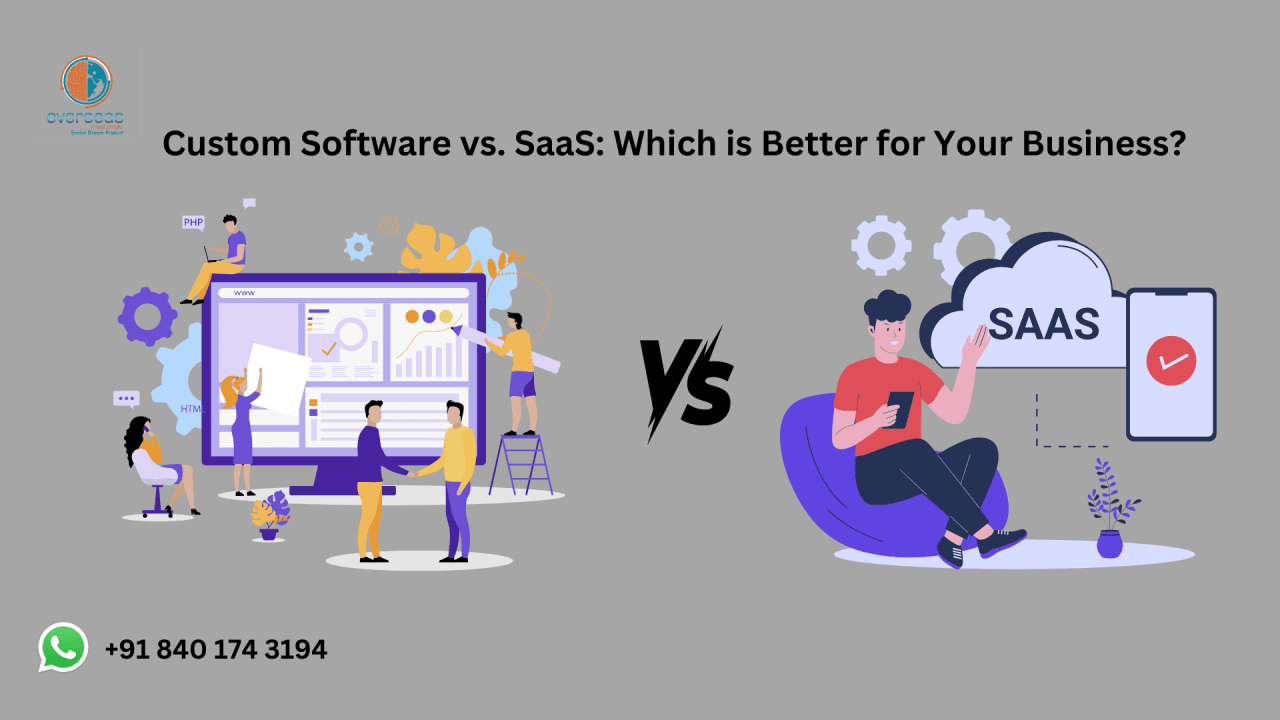
Custom Software vs SaaS: Which is Right for Your Business?
Introduction
Businesses in the USA and UAE are constantly evaluating the best technology solutions for growth. One of the most important decisions involves choosing between custom software and SaaS platforms. Both options offer unique advantages, but selecting the right one depends on business goals, scalability needs, and long-term strategy.
Custom software provides tailored solutions designed specifically for a company’s workflows and processes. On the other hand, SaaS platforms offer ready-to-use applications that require minimal setup and maintenance. This difference significantly impacts performance, flexibility, and overall operational efficiency.
Understanding factors like cloud server cost, deployment models, and scalability helps businesses make informed decisions. Many organizations collaborate with web development companies in USA to assess their requirements and build systems that support future growth. This comparison will help you determine which approach aligns best with your business needs.
Why This Matters
Choosing the right software solution directly affects business performance and scalability. The decision influences cost efficiency, user experience, and long-term flexibility.
- Determines how easily your system can scale with business growth
- Impacts infrastructure expenses, including aws hosting pricing
- Affects customization and integration capabilities
- Influences speed of deployment and operational efficiency
Core Concepts
Custom Software Development
Custom software is built specifically to meet the unique needs of a business. It offers complete control over features, integrations, and user experience. This makes it an ideal choice for companies with complex workflows or specialized requirements.
Businesses using custom solutions can design systems that align perfectly with their processes. This eliminates unnecessary features and improves efficiency across operations. Many top app development companies in USA focus on delivering such tailored solutions for enterprises.
Another major advantage is scalability. Custom software can evolve as your business grows, ensuring long-term usability. Companies can also integrate advanced technologies like AI, analytics, and automation without limitations. This flexibility makes custom development a preferred choice for organizations aiming for innovation.
SaaS (Software as a Service)
SaaS platforms provide ready-made applications hosted on the cloud. These solutions are accessible through browsers and require no complex installation. Businesses can quickly adopt SaaS tools without investing heavily in infrastructure.
One of the main benefits of SaaS is cost efficiency. Companies can use subscription-based models instead of managing servers and hardware. This makes it suitable for businesses looking for cheap cloud hosting options with minimal upfront investment.
However, SaaS platforms often come with limitations in customization. Businesses must adapt their processes to the software rather than the other way around. Despite this, SaaS remains a practical choice for startups and small businesses that need quick deployment and lower operational complexity.
Cloud Hosting and Cost Considerations
Both custom software and SaaS rely heavily on cloud infrastructure for performance and scalability. Understanding aws web hosting pricing and deployment models is essential for making the right choice. Businesses must evaluate costs based on usage, storage, and scalability requirements.
Custom software typically requires dedicated hosting environments, such as a linux cloud server or private cloud setup. This offers better control and security but may increase initial investment. However, it allows businesses to optimize performance according to their needs.
SaaS solutions, on the other hand, distribute infrastructure costs across multiple users. This reduces expenses but limits control over performance and customization. Companies must weigh these trade-offs carefully when selecting a solution.
Key factors to consider include:
- Long-term cloud server cost and scalability requirements
- Flexibility of managed cloud hosting environments
- Performance needs for high-traffic applications
- Security and compliance requirements
Key Benefits
Both custom software and SaaS offer distinct advantages depending on business requirements.
- Custom software provides full control, flexibility, and scalability
- SaaS ensures quick deployment with minimal technical complexity
- Custom solutions integrate easily with existing systems
- SaaS reduces upfront costs and infrastructure management
Common Mistakes
Businesses often make critical mistakes when choosing between custom software and SaaS solutions.
- Selecting cheap cloud hosting without considering performance needs
- Ignoring scalability while planning long-term infrastructure
- Choosing SaaS when deep customization is required
- Overinvesting in custom software without clear business goals
Future Trends
The future of software solutions lies in hybrid approaches that combine the strengths of both models. Businesses are increasingly adopting systems that integrate SaaS tools with custom-built applications. This allows them to achieve flexibility while maintaining efficiency.
Cloud technology will continue to evolve, offering better performance and cost optimization. Companies will rely more on cloud based server for small business solutions to scale operations efficiently. At the same time, AI-driven automation will enhance both custom and SaaS platforms, making them smarter and more adaptive.
Organizations that partner with experts like MatchBest Software can build scalable systems tailored to their needs. Exploring advanced platforms such as AVAONE also helps businesses leverage automation and innovation effectively.
Conclusion
Choosing between custom software and SaaS depends on your business goals, budget, and growth plans. Custom software offers flexibility and scalability, making it suitable for enterprises with complex requirements. SaaS provides simplicity and cost efficiency, making it ideal for startups and small businesses.
The right approach is to evaluate your needs carefully and consider long-term scalability. Businesses should focus on performance, integration, and cost optimization before making a decision. With the right strategy, both options can deliver significant value and support sustainable growth.
FAQ Section
1. What is the main difference between custom software and SaaS?
Custom software is tailored to specific business needs, while SaaS is a ready-made solution. SaaS requires less setup, but custom software offers more flexibility.
2. Which option is more cost-effective?
SaaS is usually cheaper initially due to subscription models. Custom software may have higher upfront costs but offers better long-term value.
3. Is custom software better for scalability?
Yes, custom software can scale according to business growth. It allows integration of advanced features without limitations.
4. Can SaaS solutions handle complex business processes?
SaaS can manage standard workflows efficiently. However, it may not support highly customized or complex operations.
5. How does cloud hosting impact software choice?
Cloud hosting determines performance, cost, and scalability. Businesses must evaluate hosting options carefully before choosing a solution.
Latest Article
The Autonomous Enterprise: How AI Is Rewiring the DNA of Global Business
Previous Blogs
VAPT Services for Cloud Applications
Author
Written by: Andrew